
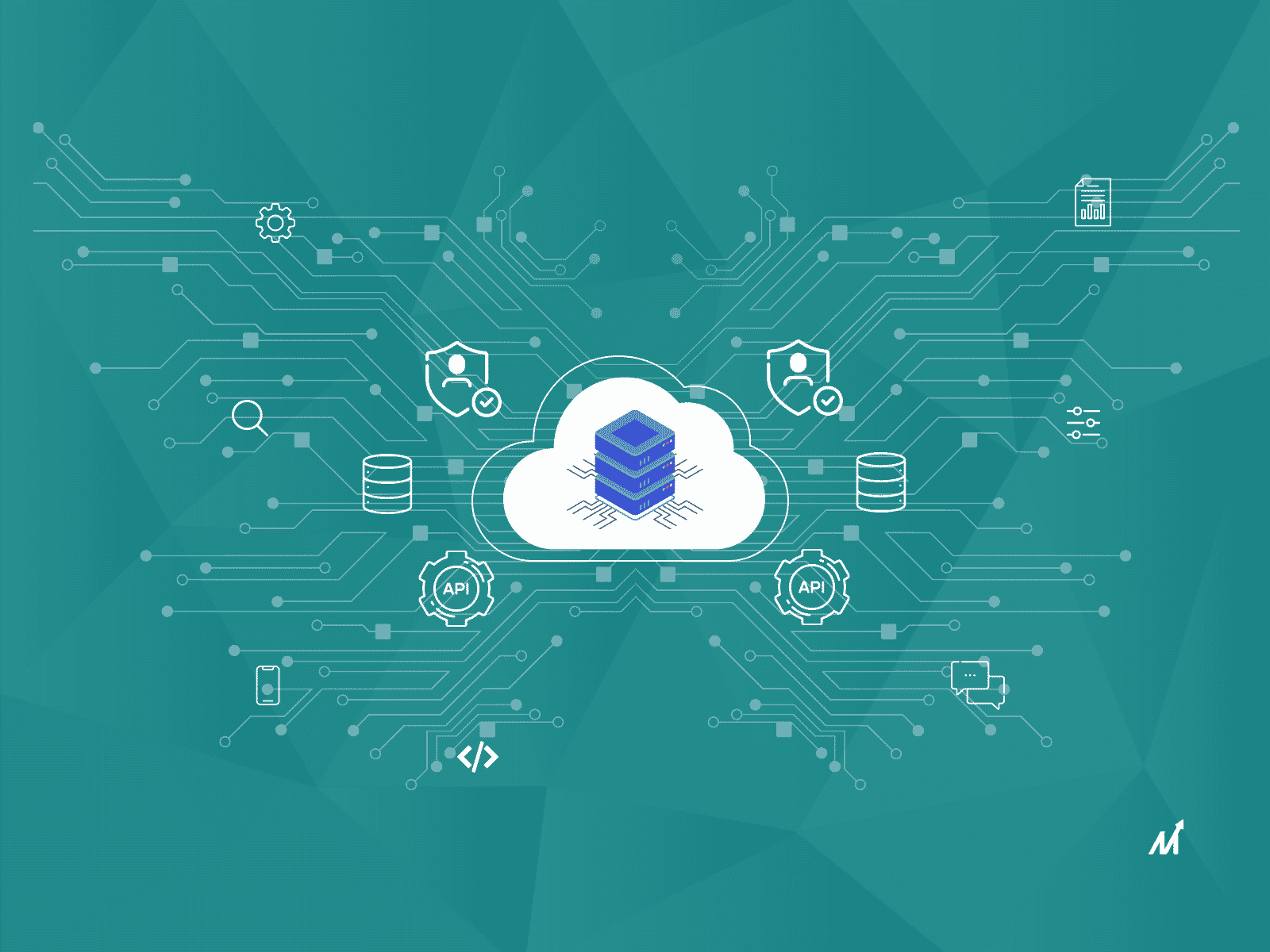
Cloud-based app development uses features from cloud platforms to build scalable applications using cloud app services over the Internet. Serverless application architecture is a cloud-based code execution model where the cloud provider handles all the backend resources.
Serverless computing is on the rise, with businesses extensively demanding it. It has been stated that more than 50% of companies will switch to serverless architecture by 2025.
Serverless architecture outlines a technique for businesses to create and execute apps without having to handle infrastructure management. It offers a solution to relieve your workload of the duties associated with architecture, such as provisioning, scaling, and maintenance. You pay for what you use with automatic scaling.
Amazon Web Services has experienced significant growth since the creation of this new technology (AWS). According to a recent survey, 40% of firms have implemented serverless architecture. The key drivers of adoption are reduced costs, scalability, developer efficiency, and other factors.
It is defined as a model where a third party handles all the servers and backend, which includes databases, security, storage, etc. The company does not have to deal with any infrastructure, which enables them to focus on other integral parts. Enterprises develop as well as deploy their applications on a server hosted by a third party, which handles all the logistics and backend support. Service providers, such as AWS, Google, and IBM, take all the management and maintenance. Serverless application architecture is also sometimes referred to as “function-as-a-service.”
Serverless computing is only charged when used, usually triggered by some event. It depends on the operation, the time it takes, the number of resources it’s using, the amount of code that must be run, etc. It does not have a monthly/yearly fee and is also purely based on the actions triggered by any request.
The customer has to develop the business logic and write the code, which is then uploaded. The provider then takes care of the rest, i.e., hardware management, processes like multi-threading, allocation of virtual machines, etc.
No wonder this model is in such demand as it reduces the technical load on the client by tons and helps make efficient, quick, as well as scalable applications!
There are a few terms that one must keep in mind to understand serverless architecture better:
Serverless architecture excels in handling ephemeral tasks and accommodating fluctuating or erratic workloads. Recognized paradigms for implementing serverless systems comprise:
A phased adoption approach is commonly exercised, as developers incrementally transfer specific components of their application to a serverless framework while retaining others on conventional servers. The modular nature of serverless architecture allows you to incorporate additional functions conveniently as new needs emerge. This flexibility allows for an evolutionary transition to serverless systems, facilitating organizational agility and efficient resource utilization.
Serverless architecture relies on a third party, such as a cloud provider, to handle the servers your application uses. This helps you to focus on other aspects, such as the front end and user experience.
There is a significant risk in investing in serverless architecture on your own for your applications, as you never know initially what the outcome will be. Purchasing and maintaining servers can be heavy on resources, and expanding becomes more tedious when you want to develop your application. If you opt for serverless application architecture, you won’t have to worry about these factors, and scalability becomes easier.
One of the most significant advantages of this kind of serverless architecture is the different areas where it helps to save money while providing the same quality of service. In traditional architecture, one needs to be safe and purchase extra servers in case of downtime or performance bottlenecks. Serverless application architecture charges you only when it is in use, meaning you pay only for the services triggered by events.
The cloud provider also takes maintenance, and businesses don’t need to worry about hiring a specific team just for this purpose. This saves human resource costs also.
A significant amount of time reduces as the efficient setup of the development environment speeds up the product’s market launch and eliminates backend pressure. The system ships features faster, delivering updates to the user more quickly.
Outsourcing the backend support to a third-party requires complete faith and trust in the vendor. If there is any problem, you can’t solve it on your terms and in a fast manner. You need to wait patiently for the service provider to solve it. Switching from one provider to another, from AWS Lambda to Azure, is also tricky.
For debugging and testing the application, it is essential to know how the backend works and where the error occurs. In serverless architecture, this is difficult to see completely. Integration tests are also more complex since the environment is tough to replicate.
Multiple clients access the server at the same time. A lack of data abstraction poses a risk, and faults in the infrastructure can compromise data.
Understanding and learning about FaaS (Function as a service) can be pretty tricky and complicated despite the number of resources that are available on the Internet. Also, for implementing the serverless architecture, one needs to break the monolith structure into microservices which requires expertise and help from professionals to break it down smoothly.
Containers are lightweight and portable and run anything, from a small microservice to an extensive application. Additionally, these contain all the codes for running it independently, from binary files to executables.
Some points with respect to which this type differs from serverless architecture are:
In serverless, functions are triggered by an event. These run for a short period and terminate after execution. The benefit is that it pushes apps to production faster. In container architecture, the containers are always running and do not die even after execution. They run for a prolonged period of time.
Serverless architecture runs on particular hosting platforms provided mainly by cloud providers such as AWS Lambda. Container architecture can run on operating systems such as Windows and Linux servers.
Serverless architecture cannot be run locally. It becomes highly complex to run it outside a public cloud platform. Container architecture can run on your local computers, and setting up its development environment on your workstation is easier.
In serverless architecture, the function invocation time is higher. However, you might face latency issues if multiple users try to access the same service. Containers have a much lower latency time. You need to send an HTTPS request, and also you’ll immediately get a response.
Serverless architecture is biller according to how you use it. Additionally, deploy and run container architecture engines for free on your local environment, as they are open source.
It’s evident how shifting to serverless architecture can boost your business and take care of all the application backend support.
Markovate, as a cloud app development company, exploits its potential to the maximum to encompass as many services as possible. We provide deep expertise and professionals who offer adaptable and secure solutions using leading-edge technologies. Furthermore, Markovate’s experts can ensure data security, zero downtime, and fault tolerance through effective cloud integration. We also provide API integration, data analytics, and end-to-end development services. Our various models adapt to your needs and requirements, selecting the one that best suits your business model. Furthermore, our cloud app development follows several processes, from wireframing to testing and support, to ensure you have the best solution possible!
The four core components of serverless development are FaaS (Function As A Service), BaaS (Backend As A Service), API Gateway, and the database.
Serverless architecture for DevOps can be beneficial as it provides greater scalability, more flexibility, and a quicker time to release, all at a reduced cost.
Yes, serverless architecture is the future, as the companies already adopted it have observed agility, operational benefits, and cost saving. Thus, no wonder more and more companies are shifting to this model to increase their business functionality.
AI in preconstruction is moving from experimentation to practical use as more companies invest in…
A drawing lands in an RFQ inbox. Someone runs it through an OCR tool, or…
Quote turnaround time gets blamed on pricing. In most shops, that's not where the delay…
A shop wins an RFQ for a part that starts as a permanent mold casting.…
A PDF drawing and a CAD file arrive in the same package. Both represent the…
A CAD-PLM Manager at a global ceramics manufacturing company recently described their quoting challenge in…

