


MLOps Consulting Services

Our expertise in MLOps consulting
MLOps process we follow
Synchronizing Machine Learning with Business Objectives
- Getting a grip on the business targets and the larger dreams of the firm.
- Sketching out the problem that machine learning can unravel.
- Hunting down the right data sources and the data required to shape the machine learning model.
- Formulating a blueprint for the lifecycle of the machine learning model – from birth to testing, deployment, and babysitting.
Nurturing Data and Governing its Growth
- Designing a tool for unseen extraction or batch fetching from the cherry-picked data source.
- Baking in an automatic data validation process to ensure the data remains pristine and sticks to the decided schema.
- Applying a clever split method to remove separate training and validation data chunks from the validated data pool.
- Laying the groundwork for a feature store that neatly houses and organizes pre-existing features.
Cultivating the Model
- Handpicking a diverse range of storage-neutral version control systems that play well with machine learning workflows.
- Harmoniously blending these version control systems into the platform and getting the settings right.
- Ensuring that fresh metadata springing from new training runs are auto-saved into the correct version control system.
- Establishing a metadata library to hoard relevant information for future deep dives.
Appraising the Model
- Framing up a mechanism for model scrutiny and validation using the toolkit of choice.
- Switching on the auto-capture for all critical performance data each time the model struts its stuff.
- Safeguarding all essential details in a manner that facilitates effortless result reproduction.
- Marking out specific triggers that kick-start pre-training when the model’s performance isn’t up to scratch.
Deploying the Model
- Settling on the perfect framework to gift-wrap the model as an API service.
- Or taking a different route – choosing and finetuning a container service for deployment.
- Crafting a safe, production-ready home for the models.
- Building a model registry – a logbook to store all metadata that matters for each model.
Keeping an Eye on the Model
- Picking the best agent to constantly watch over the model in real-time.
- Tweaking the agent to pick up anomalies, sense shifts in concept, and keep a close watch on model accuracy.
- Adding extra measures to keep tabs on how much resources the model is munching on.
- Drawing up the rules for re-training and setting up alerts to match.
Why partner with Markovate for MLOps consulting?


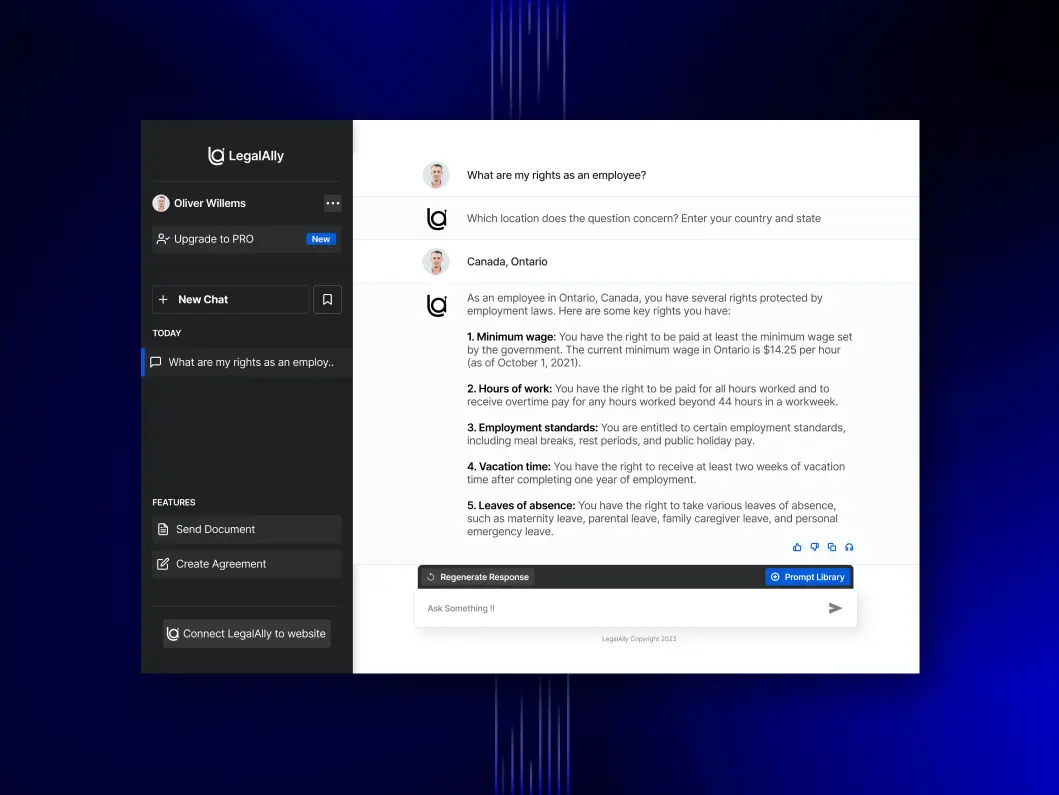
Reimagine Legal Support Driven by in-Depth Legal Research
- Legal Chatbot Assistant
- Improved Communication Efficiency
- Research Time Reduction by 64%
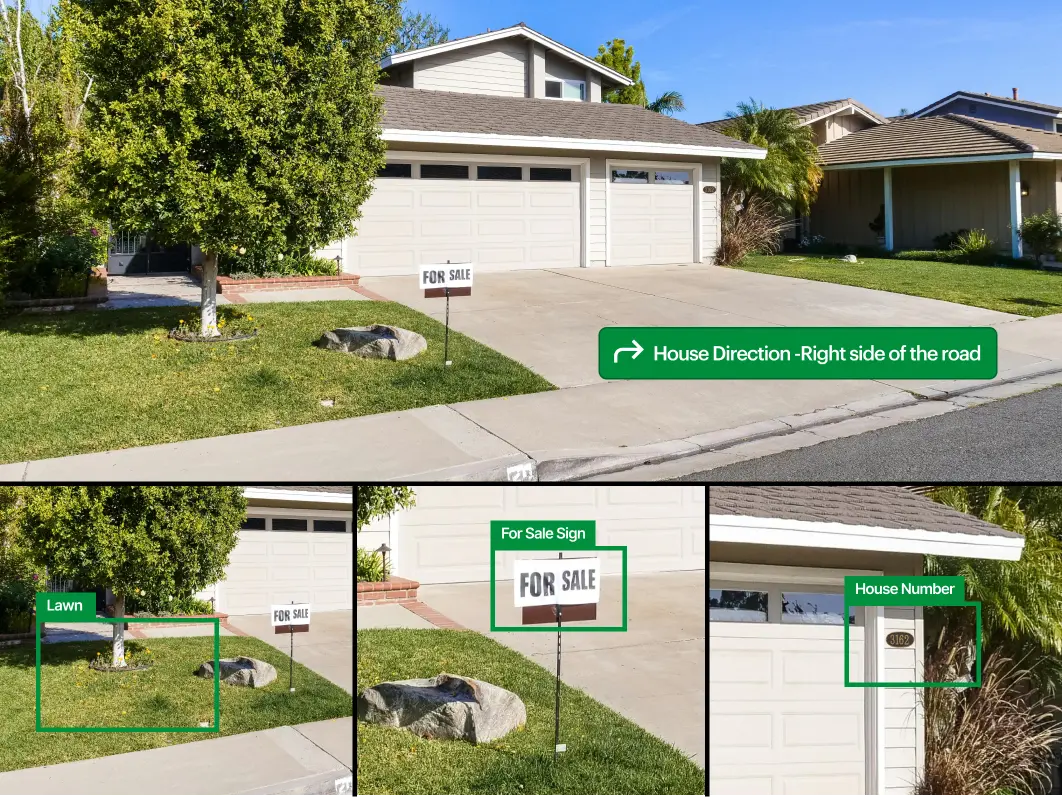
Reduced Inspection Times for Property Inspectors
- Deep learning and computer vision driven image data extraction
- GPT-based NLP chatbot for enhanced customer experience
- Improved work efficiency by 80%
- Image classification for detecting anomalies
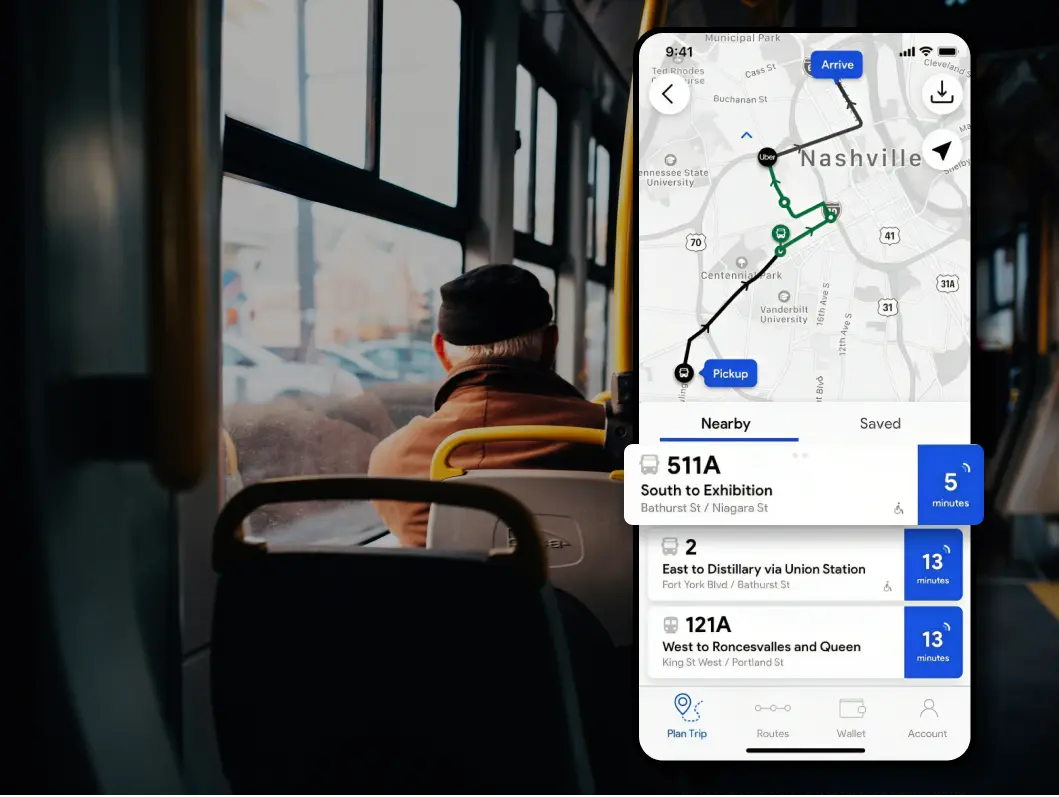
Helped Trapeze Group, Revolutionize Mobility with a Paratransit Solution
- Real-time vehicle tracking
- Advanced algorithms for efficient route planning
- In-app communication interfaces
- Strict adherence to accessibility and privacy laws
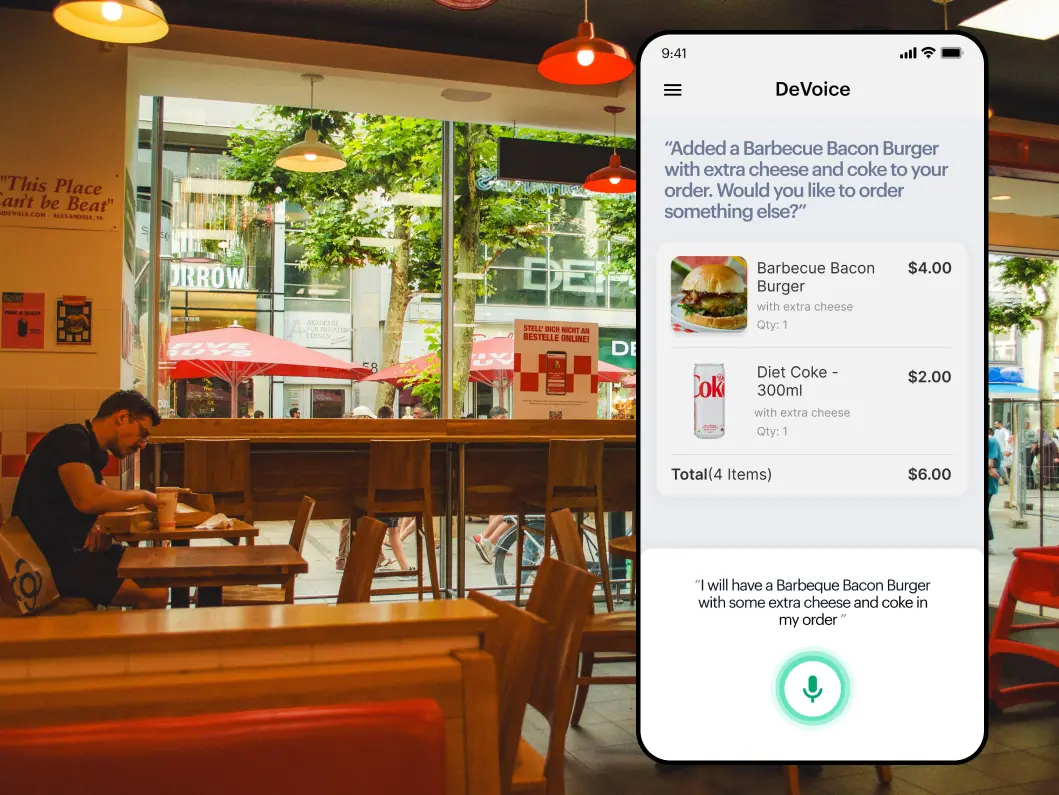
Redefining Restaurant Ordering with a Voice Ordering Solution
- State-of-the-art voice recognition
- Provides natural dialogues and verbal responses
- Multi language support for diverse customers
- Dynamic interaction for enhanced engagement
Leading brands we’ve worked with

Our Machine Learning operations tech stack

What our clients say:

“An impactful AI solution for enhanced coding accuracy, claims, and revenue”
“Markovate quickly understood our vision to improve clinical coding accuracy and streamline revenue cycle workflows. Their team delivered a robust, HIPAA compliant AI-powered solution that reduced coding errors, improved claims acceptance rates, and accelerated reimbursement timelines. They operated like an extension of our team—highly responsive, accountable, and solution-driven. The impact on operational efficiency and revenue outcomes was both immediate and measurable.”

“Brought speed and precision to property inspections”
“Thanks to Markovate and their solution, our inspection accuracy has skyrocketed, significantly reducing our operational costs and improving customer satisfaction.”

“Enhanced retail operations with strategic tech guidance”
“As a retail business, finding the right technology partner was crucial. We partnered with Markovate, who expertly guided our product development from concept to launch. Their recommended innovative solutions have significantly enhanced our operations and reduced our costs.”

“Improved accessibility and efficiency in transit services”
“Partnering with Markovate to enhance our paratransit transportation system was a remarkable experience. We are deeply impressed by the precision and effectiveness of their solution.”

“Helped accelerate takeoff and estimation process”
“The automation of blueprint analysis has significantly reduced errors and saved us both time and costs. Markovate’s support and ability to customize the solution to our needs have made them an invaluable partner in our projects.”

“Delivered a seamless mobile app journey - start to scale”
“In every sense, working with Markovate has been amazing. The experience & outcomes were excellent from conception to creation & throughout the evolution phase. We are grateful that we could find Markovate to assist us as our mobile application met our expectations.”

“Added real business value to our product launch”
“Worked with Markovate and Mansi Takyar for our software launch in Canada. She has excellent business sense and truly added value to our product’s success. We highly recommend Markovate.”

“Delivered a smarter, more scalable app experience”
“Worked with Rajeev and Mansi both for Hawaii Revealed app development and launch. Excellent people with a thorough understanding of their business. Experts in providing solutions for scalability and product modernization.”

“Trusted experts in end-to-end digital product creation”
“I recommend Markovate to owners looking to design a new product or planning to develop it. Their team is fully skilled in building mobile applications and web solutions.”
MLOps consulting
Can you explain MLOps?
How does your team facilitate the application of MLOps in my enterprise?
Our team thoroughly reviews the existing ML framework in your organization, pinpointing potential areas of enhancement. From there, we assist in designing and executing data pipelines, constructing and deploying ML models, setting up monitoring and alert systems, and formulating ideal MLOps practices within the firm. Schedule a consultation to learn more.
Do you provide tailor-made solutions or fixed MLOps packages?
Our service range includes bespoke solutions and standardized MLOps packages to match your business’s specific necessities and stipulations. Our adept team collaborates with you, customizing our services to suit your needs and maximizing value.
What's the process to engage with your MLOps consulting services?
Initiating our MLOps consulting services is straightforward. Complete the contact form or connect directly with our team. We’ll then arrange a consultation to understand your requirements and devise a plan to meet your MLOps objectives.
Point of view
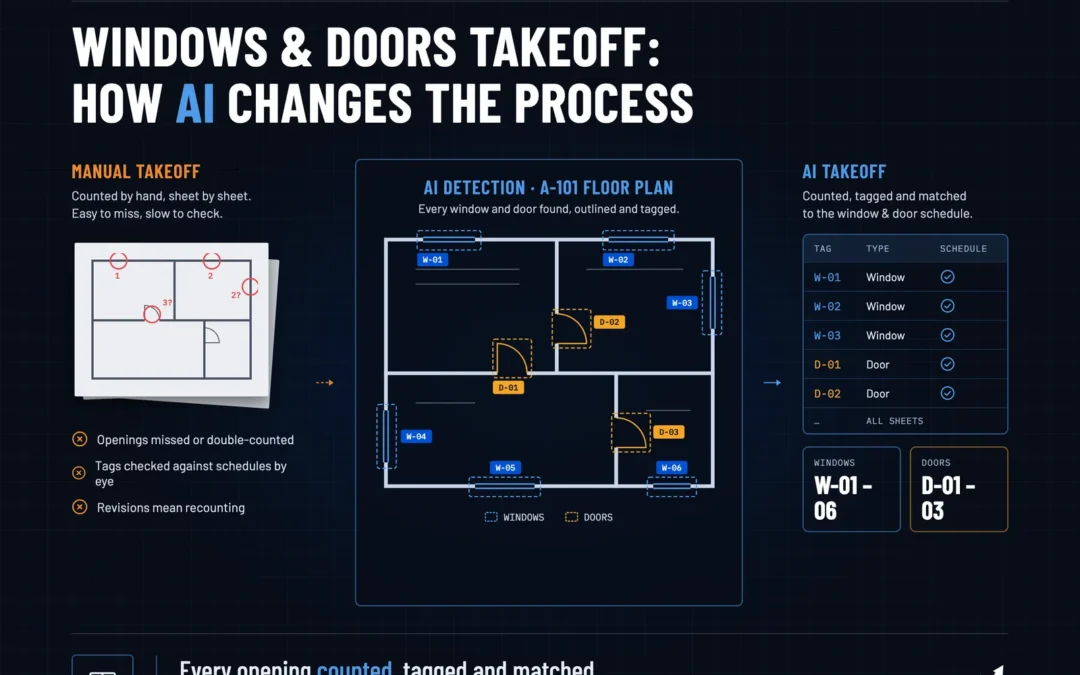
Windows and Doors Takeoff: How AI Changes the Process
A window and door takeoff starts with a drawing set, but the information needed for it rarely sits in one place. Window marks may appear on elevations, while sizes and types appear in schedules. Plans can show locations, dimensions, and other details that affect the...
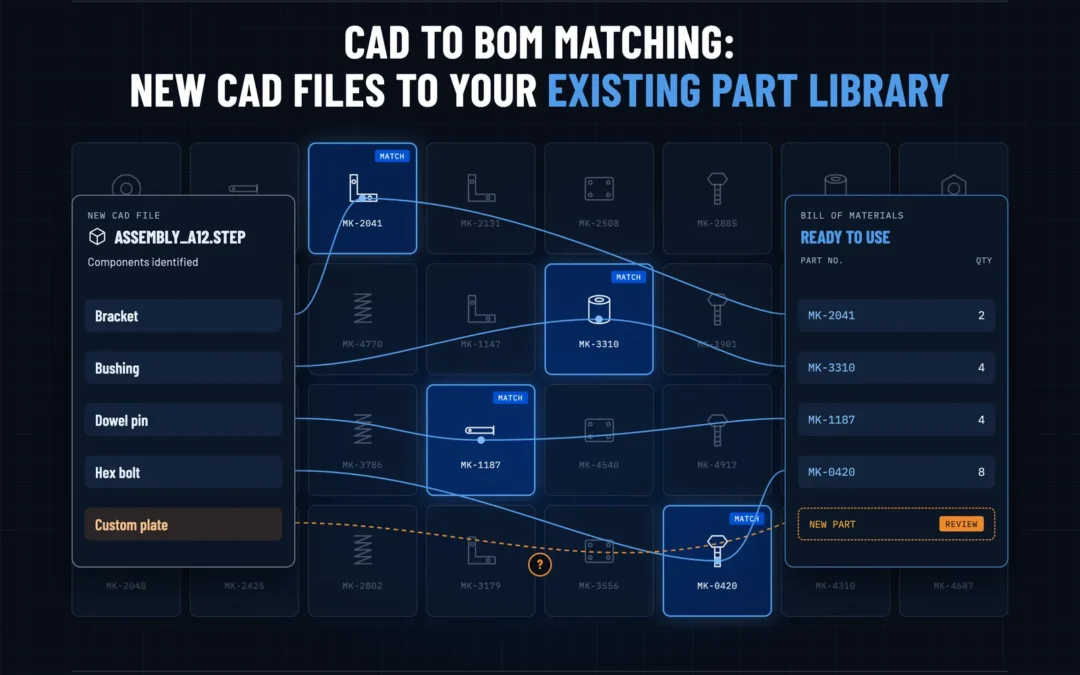
CAD to BOM Matching: New CAD Files to Existing Part Library
A new customer CAD file does not always mean a new part. Manufacturers often receive CAD files for components that may already exist in their part library. The challenge is finding that connection. A new file may use a different name, contain limited metadata, or look...
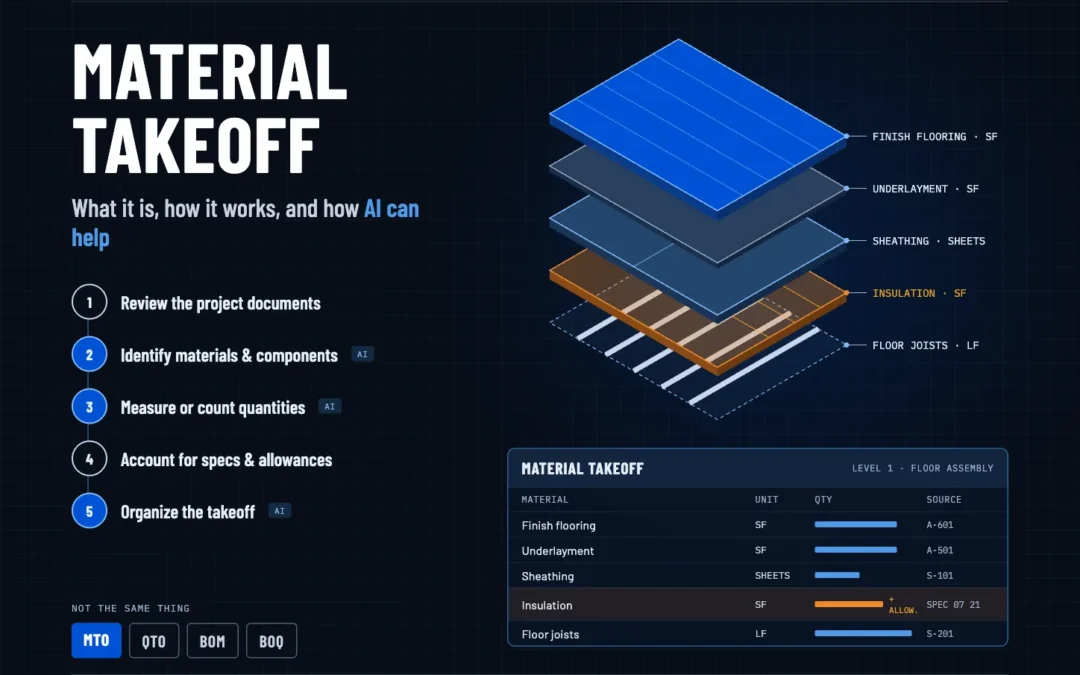
Material Takeoff: What It Is, How It Works, and How AI Can Help
A material takeoff identifies the materials needed for a construction project and determines the quantity of each item. Estimators use this information to prepare accurate cost estimates, bids, and procurement plans. The process starts with construction drawings,...
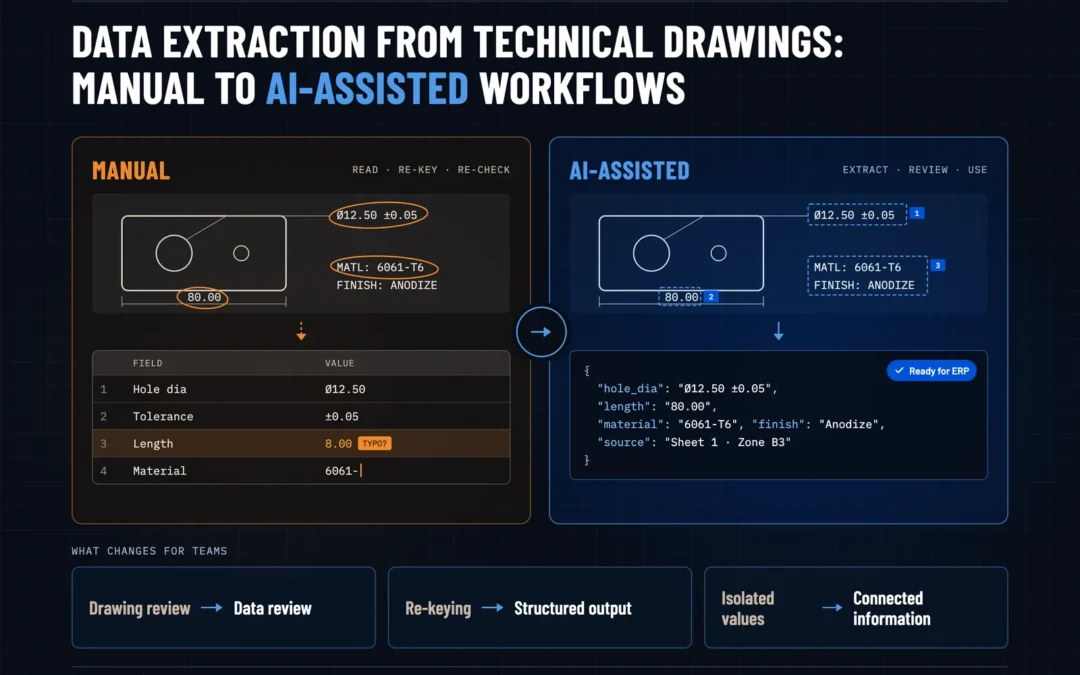
Data Extraction From Technical Drawings: Manual to AI-Assisted Workflows
Technical drawings already contain the information engineering teams need. Dimensions, tolerances, materials, notes, BOM details, and other requirements are already there. So why do teams still spend time reading drawings and entering that information into...