

Customers expect next-day delivery, fuel and labor costs keep rising, and one port delay can ripple through a whole network. That’s why logistics teams are putting AI to work, and the spending shows it. The AI in logistics and supply chain market was worth about $20.1 billion in 2024 and is projected to reach $196.6 billion by 2034, a 25.9% annual growth rate (GMI).
If you’re setting your 2027 plans and budgets now, this guide is for you. It covers 15 AI use cases in logistics that companies already run in production, each with a real-world example. We also cover what to expect in 2027, the challenges to plan for, and how to get started.
15 AI use cases in logistics
1. AI route optimization
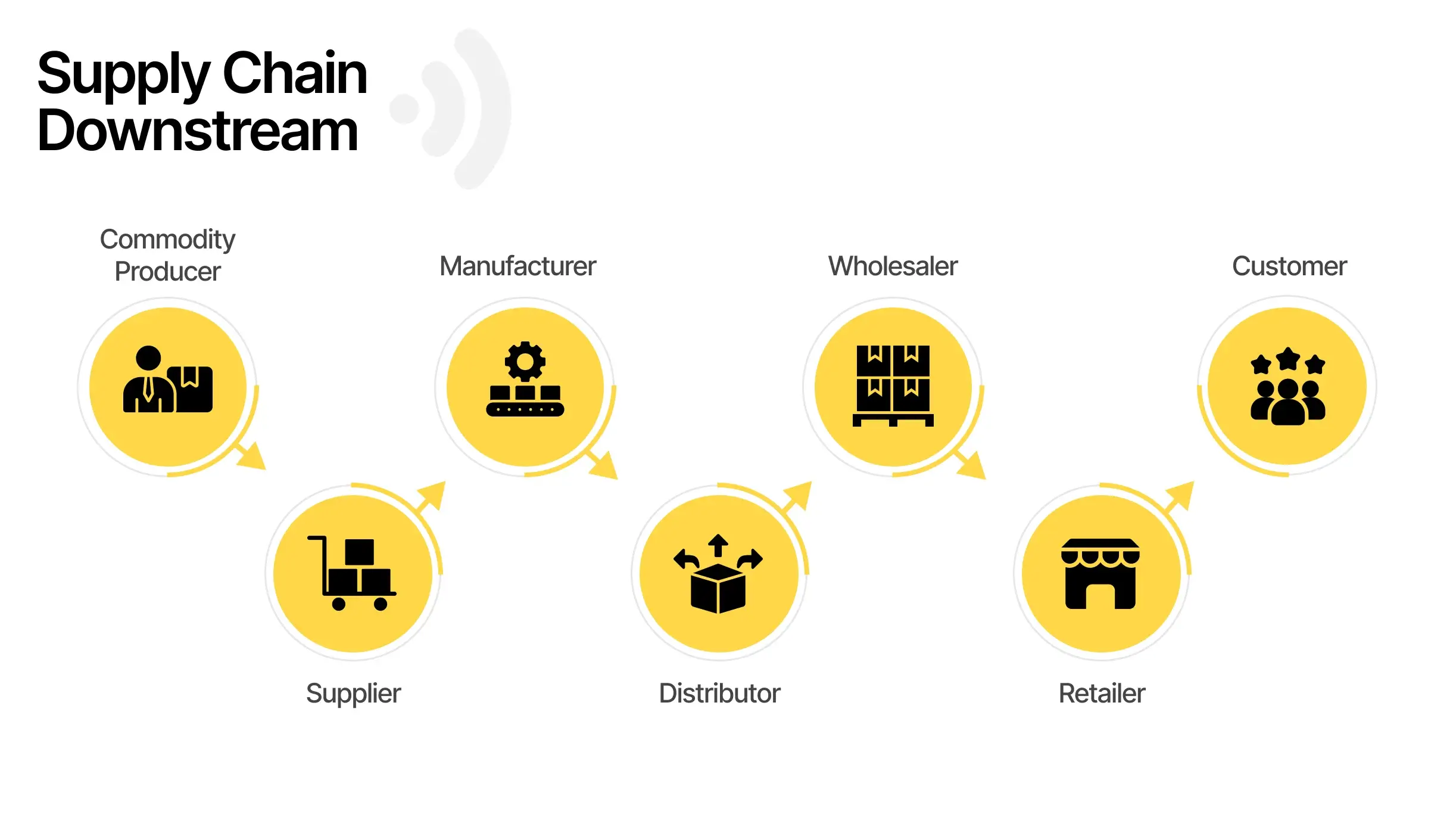
Routing models weigh traffic, delivery windows, vehicle capacity and stop density to plan the shortest workable route, then re-plan during the day as conditions change.
In practice: UPS’s ORION system was built to cut about 100 million miles and 10 million gallons of fuel a year, worth more than $300 million annually (UPS).
2. AI demand forecasting
Machine learning models combine sales history, seasonality, promotions, weather and local events to predict demand by product and location. Better forecasts drive everything downstream: stock levels, labor plans and transport bookings.
In practice: Walmart uses an in-house neural network that forecasts demand at several points in the future, drawing on past demand, planned events and global and local trends (Supply Chain Dive).
3. Inventory optimization
AI sets reorder points and safety stock per SKU and site, and suggests moving stock between locations before a shortage hits. The goal is fewer stockouts without tying up cash in excess inventory.
In practice: Walmart uses agentic AI to give teams one view of inventory across stores, fulfillment centers and other facilities (Supply Chain Dive).
4. Warehouse robotics and AI picking
Autonomous mobile robots (AMRs) carry goods to pickers or guide them through optimized pick paths. AI coordinates the fleet so robots don’t block each other.
In practice: DHL Supply Chain passed 500 million picks with LocusBots across more than 35 sites. The latest 100 million took just 154 days (DHL). Amazon now runs more than 1 million robots, and its DeepFleet AI model is expected to improve robot travel efficiency by 10% (Digital Commerce 360).
5. Real-time shipment tracking and ETA prediction
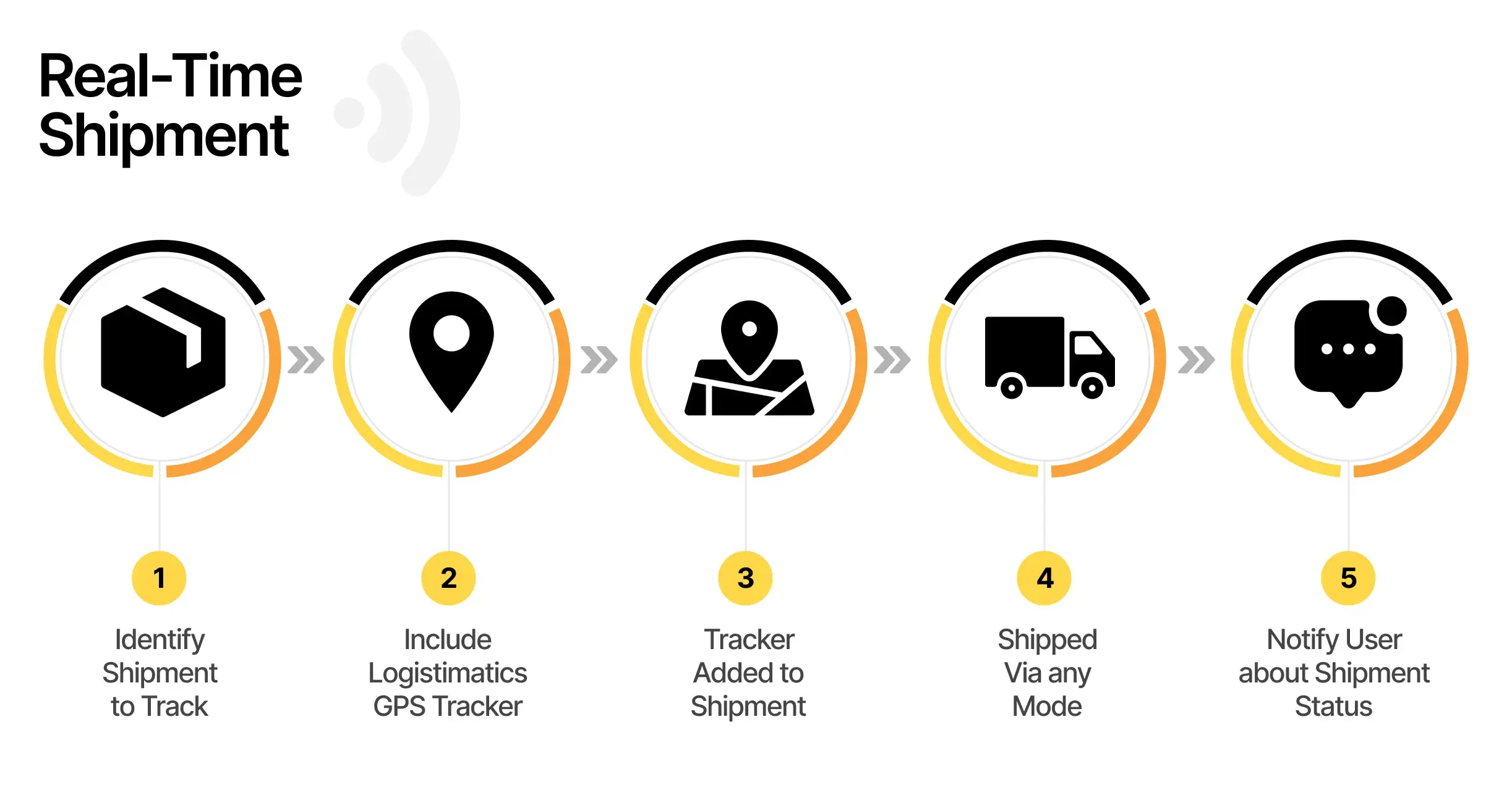
AI combines GPS, carrier updates, port data and weather to predict when a shipment will really arrive, not just when it was scheduled to. It flags likely delays early so teams can reroute or warn the customer.
6. Predictive maintenance for fleets and equipment
Models read sensor data from trucks, forklifts and conveyors to spot wear before a breakdown. Repairs get scheduled during planned downtime instead of in the middle of a shift.
7. Last-mile delivery optimization
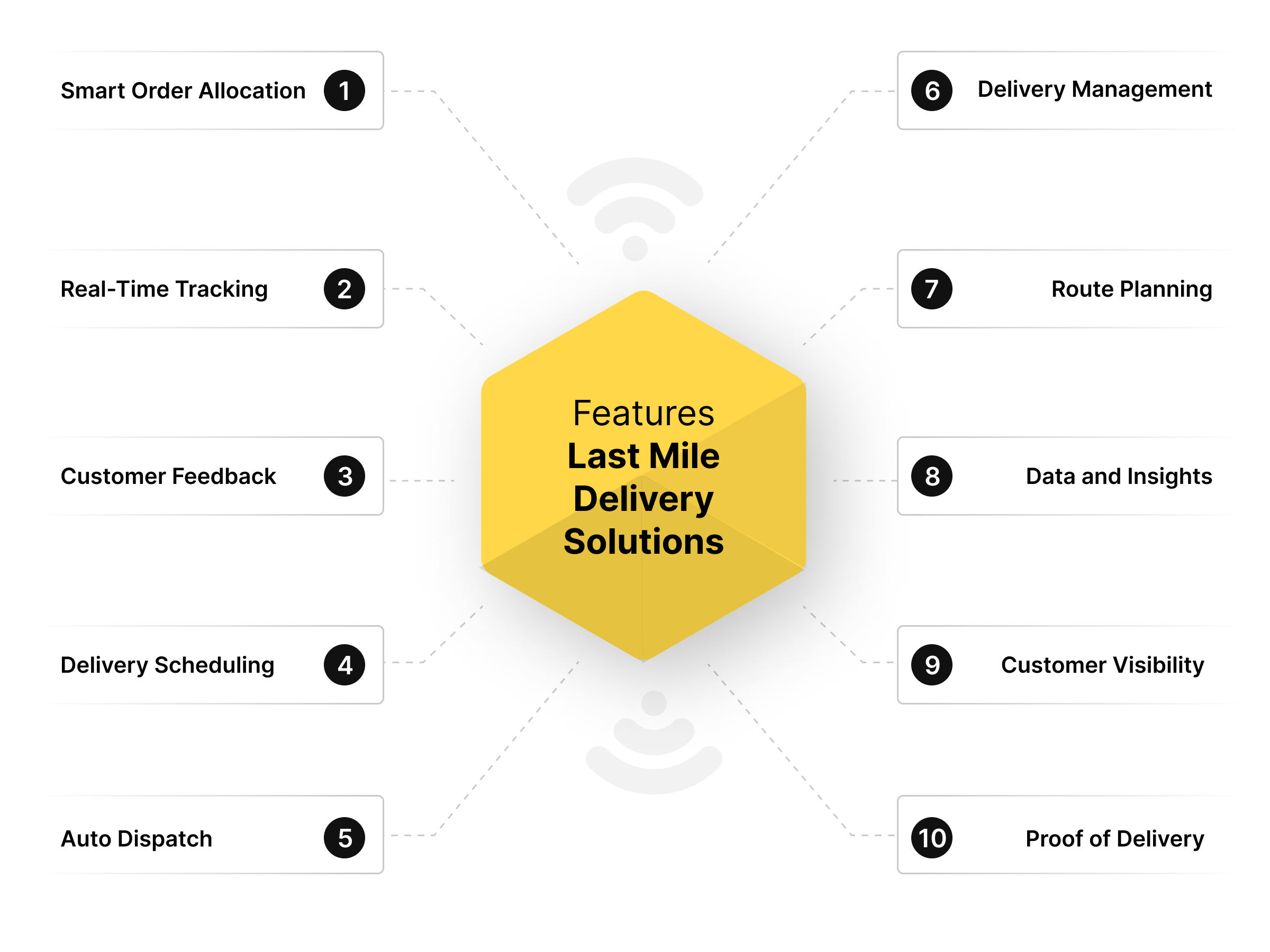
The last mile is often the most expensive leg. AI groups orders, picks delivery slots, assigns drivers and predicts which addresses are likely to fail delivery so they can be handled differently.
8. Freight matching and load planning
AI matches loads with available carriers and capacity, cutting empty miles. On the planning side, it works out how to load trailers and containers to use more of each one.
9. Freight rate prediction and dynamic pricing
Models forecast spot and contract rates from market data, fuel prices and seasonal patterns. Shippers use this to time bookings. Carriers and brokers use it to quote faster and protect margins.
10. AI document processing
Bills of lading, invoices, customs forms and proof-of-delivery slips still arrive as PDFs, scans and emails. AI document processing reads them, pulls the key fields and pushes them into the TMS or ERP, cutting manual data entry.
11. Cold chain monitoring
For food and pharma, AI watches temperature, humidity and atmosphere inside containers and alerts teams before cargo spoils.
In practice: Maersk’s Captain Peter assistant lets customers track a reefer container’s temperature, humidity and O2/CO2 levels in real time (Maersk).
12. Computer vision for inspection and damage detection
Cameras with computer vision check inbound goods, read labels, measure packages and spot damage at the dock, with no manual check needed.
In practice: Walmart uses computer vision to check the quality of inbound goods, such as spotting damaged produce or expired dates (Supply Chain Dive).
13. Supply chain risk and disruption monitoring
AI scans news, weather, port congestion and supplier data to flag disruptions early and suggest alternatives.
In practice: During Panama Canal congestion, Walmart used AI to help choose alternative port origins and import routes (Supply Chain Dive).
14. Freight audit and fraud detection
Anomaly detection reviews carrier invoices and transactions to catch duplicate billing, overcharges and suspicious activity before payment goes out.
15. AI customer service for shipment queries
“Where is my order?” is the most common question logistics teams get. AI assistants answer it around the clock from live tracking data and hand complex cases to a person with full context.
In practice: UPS combines AI-powered tracking and support with human staff, and aims to handle more than 98% of customer service requests by the end of 2026 (Nasdaq). Learn more about our AI chatbot development services.
What to expect in 2027
In 2027, AI in logistics shifts from predicting problems to acting on them. Gartner expects spending on supply chain software with agentic AI to grow from under $2 billion in 2025 to $53 billion by 2030. It also expects 60% of companies using that software to adopt agentic features by 2030, up from 5% in 2025 (Gartner). Here’s what to plan for next year:
- Agentic AI moves into daily operations: Expect more agents that handle whole tasks, such as rebooking a delayed shipment, chasing a missing proof of delivery or reconciling an invoice, with a person approving key steps.
- Autonomous trucking scales up: Driverless freight is already running. In early 2026, Aurora ran about 1,000 miles between Fort Worth and Phoenix in roughly 15 hours, and has logged more than 250,000 driverless miles since its commercial launch (TechSpot). Expect more lanes and more carrier partners in 2027.
- Digital twins become standard for planning: Carriers like UPS already use digital twins and predictive analytics to model disruptions and plan their networks (Nasdaq).
- Generative AI handles more paperwork: Large language models (LLMs) read and draft quotes, carrier emails, customs documents and exception reports. See more LLM use cases.
Plan for the workforce impact too. In a Gartner survey of 509 supply chain leaders, 55% expect agentic AI to reduce the need for entry-level hires (Gartner).
Challenges to plan for
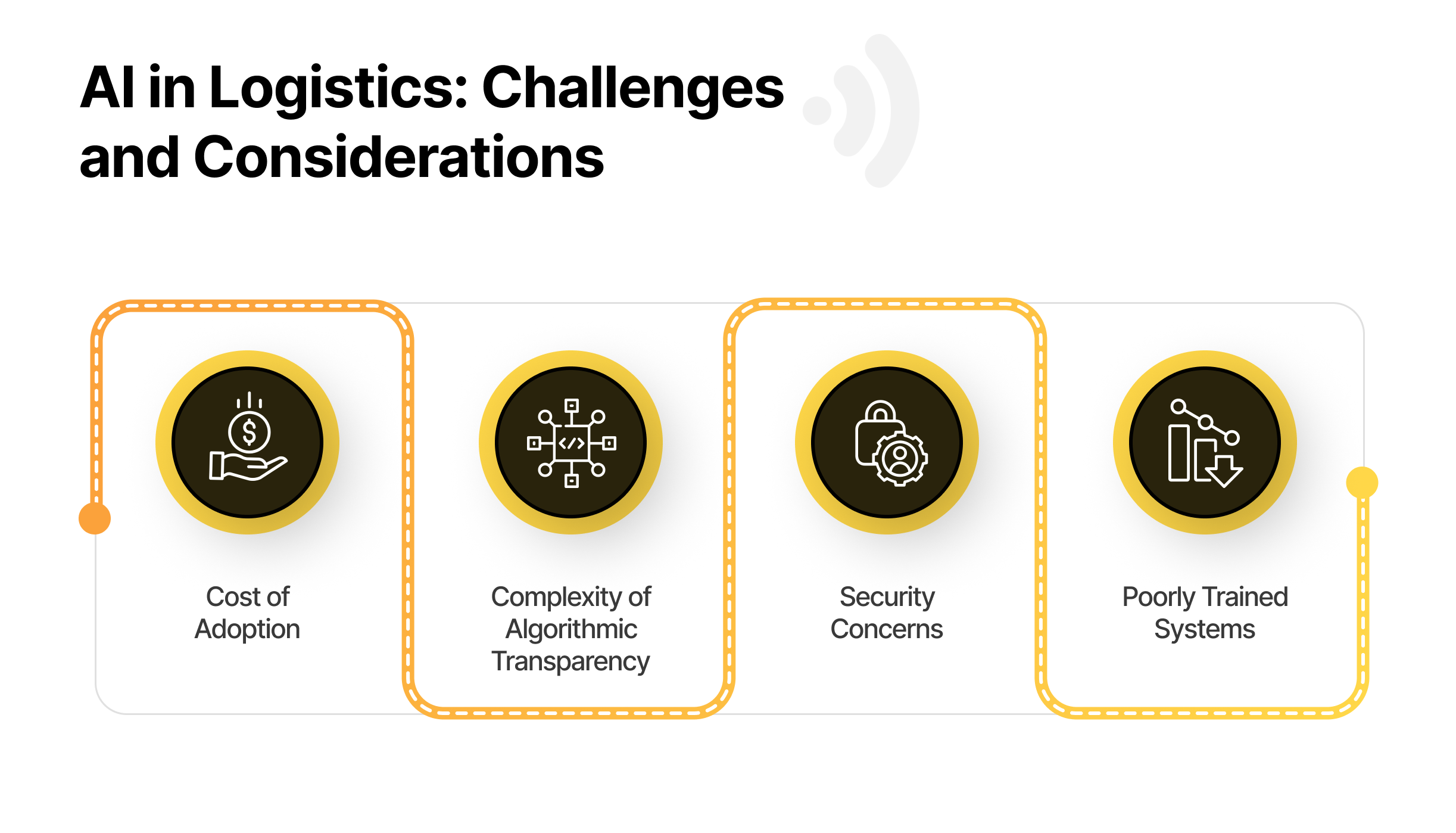
Most AI projects in logistics stall because of data and integration, not the model itself.
- Integration with existing systems: AI has to read from and write back to your TMS, WMS and ERP. Older or heavily customized systems make this the longest part of most projects.
- Scattered, messy data: Shipment, inventory and carrier data often sit in separate systems with different formats. Poor data leads to poor predictions.
- Upfront cost: Software, integration work, sensors and skilled people all cost money before savings arrive. Start with a use case where the payback is easy to measure.
- Explainability: Planners won’t trust a route or forecast they can’t understand. Pick tools that show why they made a recommendation.
- Security and compliance: More connected systems mean more exposure. Customer, shipment and customs data need strong access controls.
- Adoption: Drivers, planners and warehouse staff need training and a say in how new tools fit their day. Without that, good tools go unused.
How to get started
- Pick one costly problem. Late deliveries, empty miles, stockouts or manual paperwork. Put a number on what it costs today.
- Check your data. Confirm you have at least a year of clean history for that problem, and know which systems hold it.
- Run a focused pilot. One lane, one warehouse or one document type, for 8 to 12 weeks, measured against a baseline.
- Connect it to daily work. Feed results into the tools your team already uses, so nobody has to check a separate dashboard.
- Scale what works. Roll out to more sites or lanes once the pilot shows results, then move to the next use case.
How Markovate helps
Markovate builds custom AI for logistics teams, designed around your data, your systems and the problem that costs you most. We don’t sell an off-the-shelf tool. We build what fits your operation and connect it to the TMS, WMS and ERP you already run.
- Route and fleet optimization that cuts miles and fuel
- Demand forecasting and inventory planning that reduces stockouts and holding costs
- AI document processing for bills of lading, invoices and customs forms
- AI agents that handle exceptions, carrier emails and customer shipment queries
Want to see where AI would pay off fastest in your operation? Talk to Markovate’s AI team to start with a focused pilot, or explore our AI consulting services.
FAQ
How is AI used in logistics?
AI is used to plan routes, forecast demand, set inventory levels, run warehouse robots, predict arrival times, process shipping documents and answer customer queries. Most companies start with routing, forecasting or document processing because the savings are easy to measure.
What is the best example of AI in logistics?
UPS’s ORION routing system is one of the best known. It was built to cut about 100 million miles a year and save more than $300 million annually.
How much does it cost to implement AI in logistics?
It depends on the scope, your data and how many systems need to connect. A focused pilot on one use case costs far less than a full rollout and shows the return before you commit more budget.
What are the biggest AI trends in logistics for 2027?
Agentic AI in daily operations, autonomous trucking on more lanes, digital twins for network planning and generative AI for freight paperwork.
What is agentic AI in logistics?
Agentic AI handles whole tasks rather than just making predictions. For example, an agent can spot a delayed shipment, find a new carrier, rebook it and notify the customer, with a person approving key steps.
Will AI replace logistics jobs?
AI takes over repetitive work like data entry, routine scheduling and status updates. Most roles shift toward handling exceptions and making decisions, though Gartner’s survey shows many leaders expect fewer entry-level hires.
Sources
- GMI: AI in Logistics and Supply Chain Market
- UPS: ORION routing optimization (2015)
- Supply Chain Dive: 4 Walmart supply chain AI uses
- DHL: DHL and LocusBots hit 500 million picks (Aug 2024)
- Digital Commerce 360: Amazon DeepFleet (Jul 2025)
- Maersk: What is Captain Peter?
- Gartner: Agentic AI SCM software spend forecast (Apr 2026)
- TechSpot: Aurora sets 1,000-mile driverless freight milestone (Feb 2026)
- Nasdaq: UPS harnesses AI for network efficiency (Jun 2026)
- Gartner: Supply chain leaders survey on agentic AI (Feb 2026)